
 Tiếng Việt



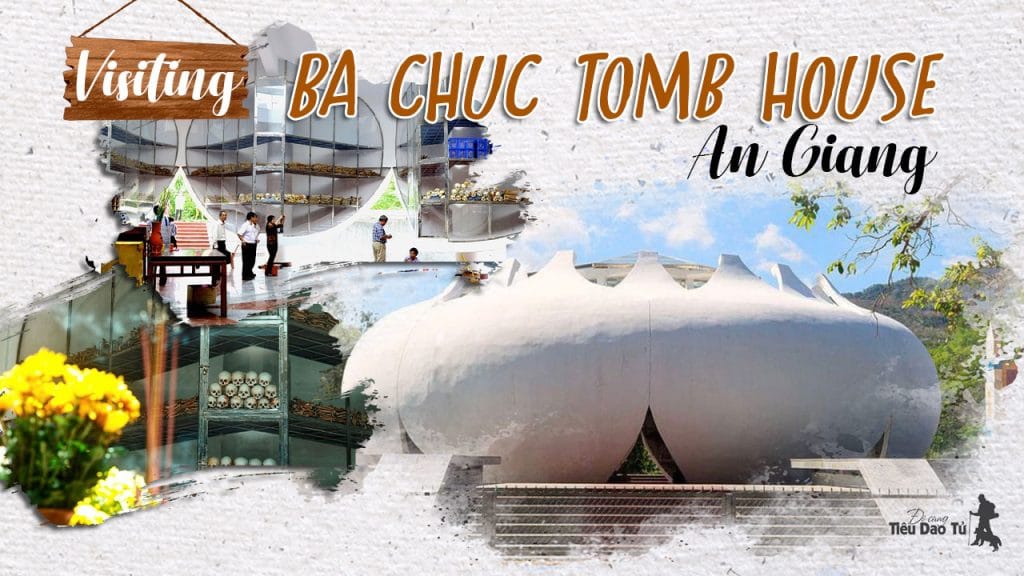
Every time the historical site of Ba Chuc Tomb House is mentioned, most people probably shiver upon hearing the story behind it. A brutal Ba Chuc massacre took place here, claiming the lives of 3,157 innocent people. Let’s learn more about the Ba Chuc Tomb House historical site to clearly see how the Khmer Rouge’s crimes continue to haunt the people of An Giang to this day.
>>> Di tích Nhà mồ Ba Chúc ở đâu? Nơi lưu giữ chứng tích tội ác Pôn Pốt
The History of the Brutal Ba Chuc Massacre
Located at the foot of the mysterious Thất Sơn mountain range, Ba Chuc town, formerly Ba Chuc commune, is only about 7km from the Vietnam-Cambodia border.

In early 1977, more than 16,000 people lived in Ba Chuc, primarily engaging in farming, crafting handicrafts, and small-scale trading. This area was also the birthplace of the Tứ Ân Hiếu Nghĩa religion. The locals frequently organized festivals and worship ceremonies to foster spiritual unity.
After the liberation of Southern Vietnam, along with the rest of the country, the people of Ba Chuc commune began to overcome the consequences of the war and build a prosperous and happy life. However, not long after, the area had to endure a bloody genocidal war caused by the brutal Pol Pot (Khmer Rouge) forces.

On the night of April 30, 1977, Pol Pot forces simultaneously attacked 14 border communes in An Giang, savagely massacring innocent people. The peak of this brutality was the massacre from April 18 to April 30, 1978, when 3,157 Ba Chuc residents were slaughtered by Pol Pot. For 12 days and nights, the area was engulfed in a sea of blood.
The cruel Pol Pot forces not only plundered property and burned down homes in Ba Chuc, but also massacred countless innocent people, regardless of age. The victims were subjected to various barbaric methods of killing that no words can fully describe, including beheading, shooting, dismembering, impaling, and tearing bodies apart.

Among the most heavily damaged locations in Ba Chuc was Phi Lai Pagoda. Nearly 300 people were massacred here by Pol Pot forces; even 43 individuals hiding under the altar in the pagoda were killed when the soldiers threw grenades, claiming 40 lives.
At Tam Buu Pagoda, 800 people were rounded up by Pol Pot troops and taken to the Vinh Thong iron bridge, Ông Tướng mound, and other areas in Ba Chuc to be shot. Places like the Phu Cuong field and Tượng Mountain in Ba Chuc no longer bore the green of vegetation but were instead stained with the colors of sorrow and blood, with hundreds of innocent bodies piled atop each other.

After the massacre, Ba Chuc was left utterly devastated. Survivors carried immense grief from losing loved ones and homes, having witnessed horrific scenes. Many were so traumatized they never dared to return, choosing instead to live as displaced persons. The infrastructure of the region was almost completely leveled.
More than 30 diplomatic delegations and journalists from various countries, along with the United Nations, visited the site to witness firsthand the atrocities committed by Pol Pot’s army against the people of Ba Chuc. In April 1978, the An Giang Red Cross, along with many others, collected the bodies of the deceased for cremation.
Building the Ba Chuc Tomb House – Commemorating Innocent Victims
Objects that remained after the massacre were collected and preserved to this day, serving as undeniable proof of the barbaric crimes committed by Pol Pot’s forces. A large number of human remains were temporarily stored behind Phi Lai Pagoda.

After the Southwest Border War ended in 1979, the first tomb house was built to commemorate the innocent people lost in the Ba Chuc massacre. It has a hexagonal shape with four arms holding four bloody swords plunged into the ground. This symbolizes the profound hatred of the people of Ba Chuc, and of Vietnam, for the barbaric Khmer Rouge forces.

On July 10, 1980, Ba Chuc Tomb House was recognized as a National Historical Relic of Vietnam. By 2013, it had been rebuilt into a complex with multiple structures.
Visiting the Ba Chuc Tomb House Historical Relic Complex, Tri Ton, An Giang
The Ba Chuc Tomb House Historical Relic Complex spans an area of approximately 5 hectares and comprises five main structures:

- The Tomb House is where the remains of innocent people killed in the Ba Chuc massacre are preserved. Its design features eight white lotus petals, inverted and facing the ground. Each lotus petal serves as a display area for a group of human remains, categorized by age and gender.

- The Memorial House displays images, bloodstains, and various artifacts that serve as undeniable evidence of the atrocities committed by the Pol Pot Khmer Rouge forces. All exhibits are thoroughly and clearly annotated.
- Auditorium
- Tam Buu Pagoda
- Phi Lai Pagoda

Images of Khmer Rouge Atrocities
Visiting the Ba Chuc Tomb House, many are left shuddering upon witnessing the remaining evidence of the Ba Chuc massacre. Every image, every artifact, every bone and skull further attests to the unforgivable crimes committed by the Khmer Rouge.

- Black and white photographs document the crimes committed by Pol Pot: These serve as the clearest and most damning evidence, undeniably proving the barbaric atrocities of the ruthless Pol Pot regime.

- Artifacts used by Pol Pot to brutalize and kill the people of Ba Chuc: These are the objects (such as awls, stakes, knives, hammers, etc.) used for the purpose of torturing and murdering Ba Chuc residents. All are displayed in glass cases for visitors to observe.

- The skulls and remains of innocent Ba Chuc residents are carefully arranged in a well-ventilated area so visitors do not feel overwhelmed or horrified. Incense is continually burned to commemorate the deceased, easing the grief of those who remain.
>> The Path to Ba Chúc Tomb – A Testament to a Bloody Massacre
An Giang Annually Holds a Collective Commemoration Ceremony for Victims of the Ba Chuc Massacre
Each year, the People’s Committee of Tri Ton District, in conjunction with the Central Executive Board of the Tứ Ân Hiếu Nghĩa Buddhist Association, organizes a Commemoration Ceremony for the Ba Chuc victims who were massacred during the Southwest Border War (March 16, 1978).
The ceremony takes place at the Ba Chuc Tomb House National Historical Revolutionary Site, Phi Lai Pagoda, and Tam Buu Pagoda (Ba Chuc town, Tri Ton district).

The devastating war has passed, leaving immense sorrow and loss in the hearts of the Ba Chuc people. However, to this day, Ba Chuc, Tri Ton, An Giang, is striving daily to build a peaceful and beautiful life. The Bay Nui (Seven Mountains) region of An Giang is experiencing remarkable tourism development, both within the province and across the Mekong Delta. If you ever have the chance to visit this mysterious That Son land, you should definitely stop by the Ba Chuc Tomb House historical site to commemorate the victims who perished there.
>>> Explore the Mysterious That Son Region with Tieu Dao Tu:
- Khám phá núi Cấm về đêm – ngọn núi cao nhất trong cụm Thất Sơn huyền bí An Giang
- Từ Cần Thơ đến Tri Tôn: Khám phá núi Cô Tô trong 1 ngày
- Khám phá núi ông Két – vẻ đẹp hùng vĩ vùng Thất Sơn huyền bí
- Khám phá núi Nước An Giang
- Trekking Ngũ Hồ Sơn (Núi Dài Năm Giếng)
- 4 câu chuyện huyền bí tại vùng Thất Sơn
If you’re interested, you can visit Tieu Dao Tu’s TikTok and YouTube channels to discover more exciting journeys across Vietnam and even abroad!

